Read in English · with German
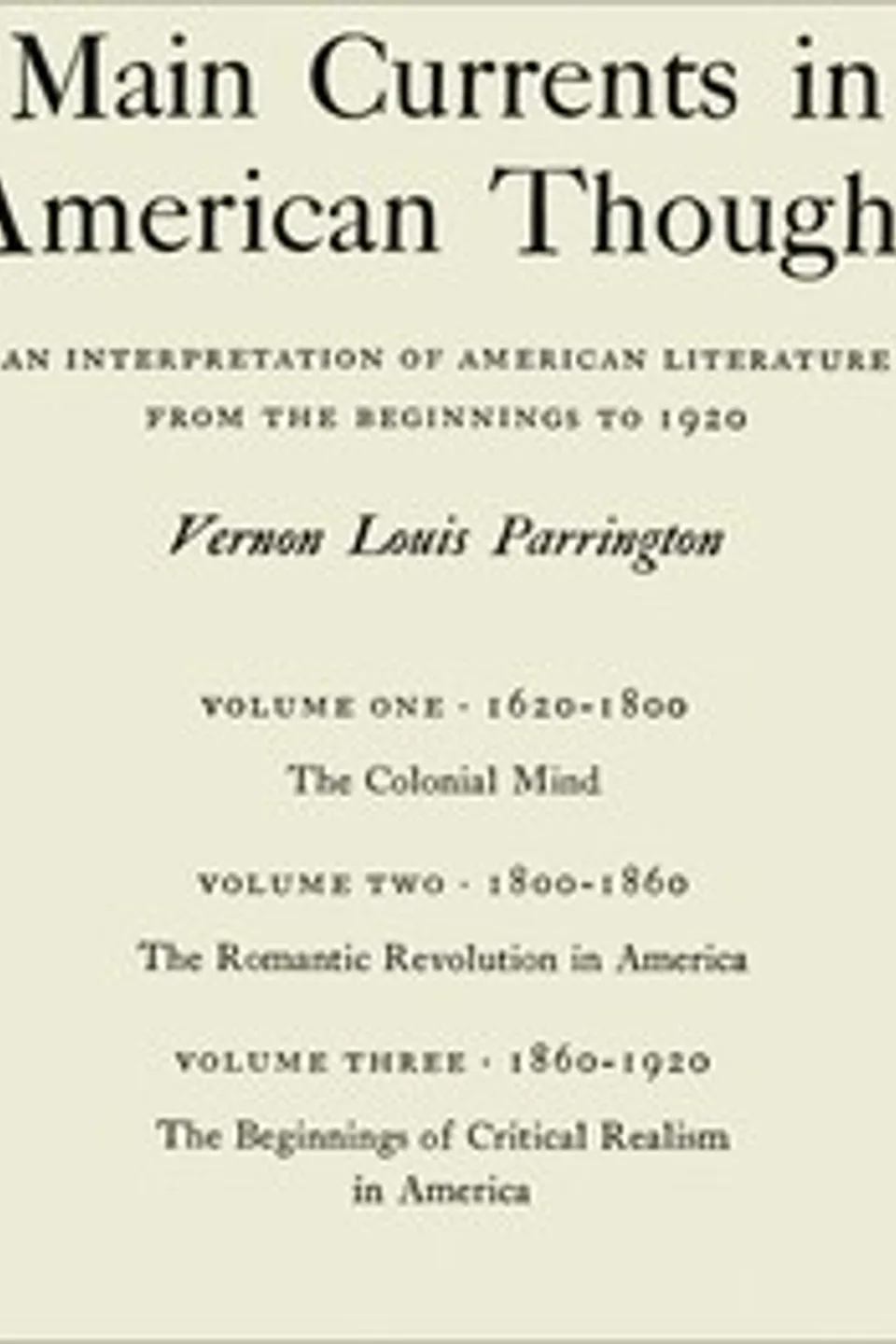
Read Main currents in American thought : $b An interpretation of American literature from the beginnings to 1920 in English, with German beside it
by Vernon Louis Parrington · 1871–1929
"Main currents in American thought" by Vernon Louis Parrington is a critical history of American literature and ideas written in the early 20th century. The study interprets American writing through the lenses of political, economic, and social change, tracing how European doctrines took root and reshaped themselves in the New World. It centers on the long contest between liberal-democratic impulses and conservative-theocratic or capitalistic systems, with Volume One probing the clash of Puritan theocracy and emerging Yankee individualism in colonial New England. The opening of the work lays out a frankly liberal, Jeffersonian vantage point and explains that the inquiry follows ideas as they evolve through theology, politics, and economics rather than through belletristic schools. The introduction maps the European bequests—English Independency (natural rights), French romantic theory and Physiocracy (equality, agrarianism), and English laissez faire (commercial individualism)—and frames colonial thought as a struggle among figures like Roger Williams, Franklin, and Jefferson on one side and John Cotton, Jonathan Edwards, and Alexander Hamilton on the other. It argues that colonial literature is best understood in its polemics on church and state. Beginning Book One, the narrative shows New England shaped by freehold landholding and a mercantile spirit, producing yeomanry and gentry and the dual ideals of Puritan and Yankee. It then sketches English backgrounds: Puritanism as a middle-class, Reformation-driven movement that fostered natural rights, while Calvinist theology resisted egalitarianism in contrast to Luther’s individualist strain. The transplant to Massachusetts fused Plymouth-style congregational churches with a corporate charter that enabled a theocratic oligarchy, yet freehold property quietly seeded local democracy even as statutes and the Cambridge Platform enforced orthodoxy. Finally, the portrait of John Cotton presents the chief priestly steward of theocracy—an erudite, commanding preacher who, after the Antinomian crisis, backed coercive orthodoxy and a biblically sanctioned, aristocratic state that restricted civic power to the godly.
Summary generated automatically by Project Gutenberg.
- Read time
- 2504 min
- Words
- 550,809
- Chapters
- 11
- Paragraphs
- 7,086
- Price
- Free
- American literature -- History and criticism
- Philosophy, American
- United States -- Civilization
- United States -- Intellectual life
- United States -- Politics and government
- United States -- Religion
This was but the beginning of a long assault on the British constitution which was to engage him much in after life.
Dies war nur der Anfang eines langen Angriffs auf die britische Verfassung, der ihn im späteren Leben stark beschäftigen sollte.
Common Sense was a pronouncement of the new philosophy of republicanism that was taking firm hold of the American mind, and which the French Revolution was to spread so widely.
Common Sense war eine Verkündung der neuen Philosophie des Republikanismus, die im amerikanischen Geist festen Fuß fasste und die die Französische Revolution so weit verbreiten sollte.
It was a notable contribution, of which Paine to the end of his life was justly proud.
Es war ein bemerkenswerter Beitrag, auf den Paine bis zum Ende seines Lebens mit Recht stolz war.
As he came to America almost casually, with no conscious revolutionary intent, so in the critical year 1787 he returned to Europe with the peaceful intention of perfecting an iron bridge on which he was engaged.
Da er beinahe zufällig nach Amerika kam, ohne bewusst revolutionäre Absichten, so kehrte er im kritischen Jahr 1787 mit der friedlichen Absicht zurück, eine Eisenbrücke, an der er arbeitete, zu vervollkommnen.
True to his Quaker breeding he was more interested in the arts of peace than of war, but again circumstance was too much for him.
Treu seiner quäkerischen Erziehung interessierte er sich mehr für die Künste des Friedens als des Krieges, doch auch diesmal war der Zufall zu stark für ihn.
Before he had completed his bridge, delegates from France came to invite him to a seat in the National Assembly.
Bevor er seine Brücke vollendet hatte, kamen Delegierte aus Frankreich, um ihn zu einem Sitz in der Nationalversammlung einzuladen.
A new day was rising there; the constitution of a freer order was being constructed, and so competent a workman could not be spared.
Ein neuer Tag brach an; die Verfassung einer freieren Ordnung wurde errichtet, und so tüchtiger Handwerker konnte nicht entbehrt werden.
In the thick of that eager world of constitution-making, Paine finally clarified his political philosophy and gave it wide currency.
Inmitten dieser eifrigen Welt der Verfassunggebung klärte Paine schließlich seine politische Philosophie und gab ihr weite Verbreitung.
He became the pamphleteer of revolution to the English-speaking world, to Philadelphia and New York equally with London.
Er wurde der Pamphletist der Revolution für die englischsprachige Welt, für Philadelphia und New York ebenso wie für London.
Yet he was never an extremist; he was a Girondist rather than a Jacobin, and when the Girondists were overthrown and a dictatorship set up, he remained a constitutionalist.
Doch er war nie ein Extremist; er war eher ein Girondist als ein Jakobiner, und als die Girondisten gestürzt und eine Diktatur errichtet wurde, blieb er ein Verfassungstreuer.
By the Jacobin radicals he came to be regarded as a reactionary from his willingness to retain monarchy in France;
Von den jakobinischen Radikalen wurde er infolge seiner Bereitschaft, die Monarchie in Frankreich beizubehalten, als Reaktionsling betrachtet;
but Paine was a practical Englishman with a shrewd judgment of what was politically possible, and he refused to outrun reasonable expectations of accomplishment.
doch Paine war ein praktischer Engländer mit scharfem Urteil für das, was politisch möglich war, und er weigerte sich, die vernünftigen Erwartungen des Erreichbaren zu überholen.
About the author
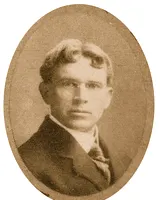
Vernon Louis Parrington1871–1929
Vernon Louis Parrington was an American literary historian, scholar, and university teacher born in Aurora in 1871 and died in Winchcombe in 1929.
The Vernon Louis Parrington page, and where to start →Questions about Main currents in American thought : $b An interpretation of American literature from the beginnings to 1920
Can I read Main currents in American thought : $b An interpretation of American literature from the beginnings to 1920 in English with German side by side online?
Yes, free. Paralelo shows the English original with a German machine translation beside it, aligned phrase by phrase: hover or tap a phrase and its counterpart lights up in the other column. Anyone can read a passage; a free account opens the whole book.
What level do I need to read Main currents in American thought : $b An interpretation of American literature from the beginnings to 1920 here?
There is no set level. Main currents in American thought : $b An interpretation of American literature from the beginnings to 1920 runs to 550,809 words in 11 chapters, and the translation sits beside it, aligned phrase by phrase, so you can start below the level the original would need on its own and lean on the translation only where you stumble.
Is Main currents in American thought : $b An interpretation of American literature from the beginnings to 1920 really free to read?
Yes. The text is in the public domain, and the translation and alignment are ours to give. A free account opens the whole book; the paid tier is for unlimited explanations.
Can I read Main currents in American thought : $b An interpretation of American literature from the beginnings to 1920 in another language?
Not yet. Each language is its own translation and alignment run, and titles are queued by demand: open the book in that language and press “Ask for priority” to move it up the queue.
How long does Main currents in American thought : $b An interpretation of American literature from the beginnings to 1920 take to read?
About 42 hours at a normal pace, longer if you stop to look at the alignment, which is rather the point.
Book details
- Original language
- English
- Translation
- German, machine translation
- Source text
- Project Gutenberg #78025
- Licence
- Public domain worldwide
Start Main currents in American thought : $b An interpretation of American literature from the beginnings to 1920 today.
Free forever, no card. The whole library opens with an account.
Start reading, it's free