Read in English · with German
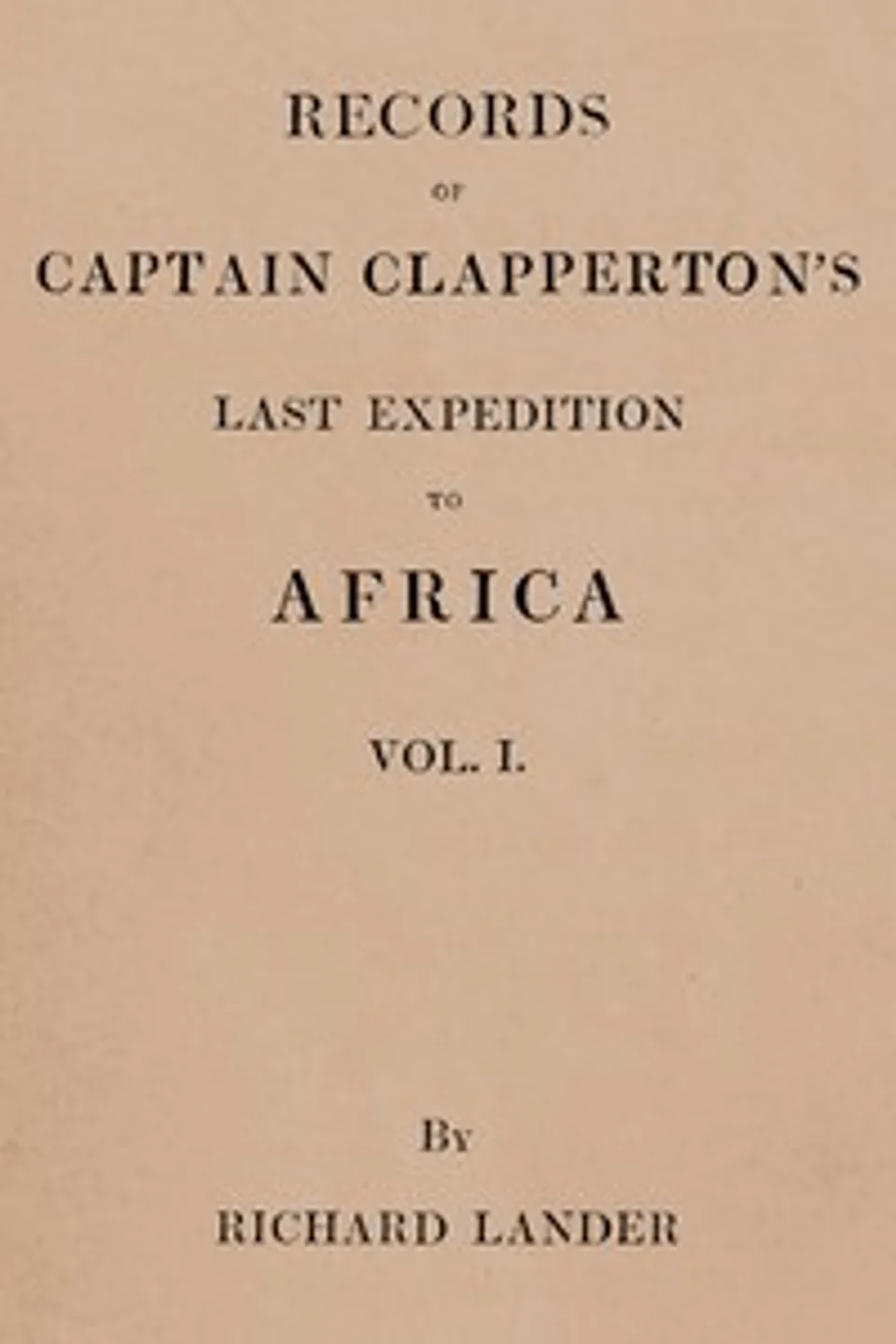
Read Records of Captain Clapperton's last expedition to Africa, Vol. 1 (of 2) in English, with German beside it
by Richard Lander · 1804–1834
"Records of Captain Clapperton's last expedition to Africa, Vol. 1 (of 2)" by Lander is a historical travel account written in the early 19th century. It offers a firsthand chronicle of an overland expedition from the West African coast into the interior, blending day‑to‑day travel hardships with close observations of local customs, politics, and the slave trade. The narrative centers on Captain Hugh Clapperton’s push toward Yoruba and Hausaland as seen through the eyes of his attendant Richard Lander, who records both the journey and the fates of the small party. The opening of the work sets out Lander’s purpose in rewriting and expanding his notes, the obstacles to note‑taking in hostile settings, and his intent to portray African society (from Falatah power to songs, laws, and superstition) alongside vivid character sketches such as Zuma and the interpreter Pasko; it also recounts his deep bond with Clapperton and a planned return to West Africa with his brother. A brief life sketch traces Lander’s Cornish origins, early wanderlust, voyages to the West Indies and South Africa, and his resolve to join Clapperton despite warnings. The narrative then follows the embarkation on HMS Brazen, stops at Madeira, Tenerife, and the Cape Verdes, the pursuit and capture of slavers, and arrival at Sierra Leone, before turning east along the coast to Accra, Papoe (where 231 enslaved people are freed), and Whydah, where Dr. Dickson goes inland (later rumored killed). After a perilous surf landing at Badagry and an audience with King Adólee, the party advances by creeks and forest paths through Yoruba towns; illness strikes repeatedly, culminating at Jannah in Lander’s delirium and brutal treatment, and Morrison’s return toward the coast. Soon after, Dawson dies from accidentally drinking ether, Captain Pearce succumbs to fever and is buried with a simple inscription, and news arrives that Dr. Morrison has also died—leaving the survivors to press on toward the interior.
Summary generated automatically by Project Gutenberg.
- Read time
- 271 min
- Words
- 59,676
- Chapters
- 18
- Paragraphs
- 506
- Price
- Free
- Clapperton, Hugh, 1788-1827
- Sudan (Region) -- Description and travel
There was this peculiarity in the appearance of his majesty’s followers: their heads were shaved either partially or wholly, and the hair of those that had any being cut into a thousand fantastic modes and forms, looked exceedingly grotesque.
Es gab diese Besonderheit im Erscheinungsbild der Anhänger Seiner Majestät: Ihre Köpfe waren entweder teilweise oder ganz geschoren, und das Haar derjenigen, die noch Haare hatten, war in tausend fantastische Modi und Formen geschnitten, was äußerst grotesk aussah.
Many of the tribes on the coast, indeed, appear to devote a large portion of their time to dressing and ornamenting their hair, which in some districts is plaited and braided with much care, and peculiar taste and neatness.
Viele der Stämme an der Küste scheinen einen großen Teil ihrer Zeit damit zu verbringen, ihr Haar zu frisieren und zu schmücken, das in einigen Distrikten mit viel Sorgfalt, eigenartigem Geschmack und Sauberkeit geflochten und geflochten wird.
Others friz out the hair like the natives of the Tonga islands, and as it is anointed with a species of red clay, softened with palm-oil, which is found in great abundance on the coast,
Andere frisieren das Haar wie die Eingeborenen der Tonga-Inseln, und da es mit einer Art roher Lehm, gemischt mit Palmöl, bestrichen wird, das an der Küste in großer Menge gefunden wird,
it adds greatly to the ferocity of their appearance.
trägt es stark zur Wildheit ihres Erscheinungsbildes bei.
The Brazen continued her course with a tolerably fair wind but heavy showers, and having passed several towns and villages, the inhabitants of some of which occasionally visited her in canoes, arrived at Cape Coast on the 14th,
Die Brazen setzte ihren Kurs mit einem ziemlich günstigen Wind, aber schweren Schauern fort, und nachdem sie mehrere Städte und Dörfer passiert hatte, deren Bewohner sie gelegentlich in Kanus besuchten, erreichte sie am 14. um ein Uhr nachmittags Kap Coast.
at one P.M.
Cape Coast castle is a strongly-built stone fortification, capable of containing within its walls the whole of the population of the town it defends;
Das Kap Coast Castle ist eine stark befestigte Steinanlage, die in der Lage ist, innerhalb ihrer Mauern die gesamte Bevölkerung der Stadt, die sie verteidigt, aufzunehmen;
the habitations of which are constructed in much the same style as those with which the whole line of coast is thickly studded; being built of earth, and thatched with rushes, interlaced with palm-leaves.
die Behausungen, die in etwa demselben Stil errichtet sind wie die, mit denen die gesamte Küstenlinie dicht besät ist; aus Erde gebaut und mit Schilf gedeckt, das mit Palmblättern durchflochten ist.
A great number of people have settled in the town from the interior countries;
Eine große Anzahl von Menschen hat sich in der Stadt aus den inneren Ländern angesiedelt;
but by far the major part of the inhabitants are Fantees, who have voluntarily placed themselves under the protection of the British fortress, in order the more effectually to secure to themselves the blessings of peace,
aber bei weitem der größte Teil der Bewohner sind Fantee, die sich freiwillig unter den Schutz der britischen Festung gestellt haben, um sich die Segnungen des Friedens noch wirksamer zu sichern und ihr
and preserve their property from the rapacity of their more restless countrymen, and the neighbouring nations.
Eigentum vor der Raubgier ihrer unruhigeren Landsleute und der benachbarten Nationen zu bewahren.
Cleanliness is by no means a characteristic of the Fantees at Cape Coast, animal and vegetable substances being allowed to accumulate and putrify in the streets, from which is exhaled so noxious an effluvium, that the air, impregnated with it,
Sauberkeit ist keineswegs eine Eigenschaft der Fantee in Kap Coast, da tierische und pflanzliche Substanzen in den Straßen ansammeln und verfaulen dürfen, von denen ein so giftiger Gestemp aufsteigt, dass die damit durchtränkte Luft äußerst
is rendered extremely insalubrious, particularly to Europeans.
ungesund wird, insbesondere für Europäer.
It is perhaps a fortunate circumstance, that vultures, attracted by the intolerable odour, resort thither in vast numbers, voraciously devouring the filth which the indolent inhabitants are either too lazy or too ignorant to remove;
Es ist vielleicht ein glücklicher Umstand, dass Geier, angezogen vom unerträglichen Geruch, sich in großer Zahl dorthin begeben und den Schmutz, den die faulen Bewohner entweder zu träge oder zu unwissend sind, um ihn zu entfernen,
for they cannot be persuaded that disease of any kind is engendered by such means.
gierig verschlingen; denn sie lassen sich nicht davon überzeugen, dass durch solche Mittel irgendeine Art von Krankheit entsteht.
If this had not been the case, it would be a miracle indeed that Europeans should exist in the town many weeks; and even the Africans themselves, in all likelihood, would speedily fall victims to pestilential disorders.
Hätte dies nicht der Fall sein müssen, wäre es tatsächlich ein Wunder, dass Europäer mehrere Wochen in der Stadt überleben; und selbst die Afrikaner würden mit ziemlicher Wahrscheinlichkeit schnell Opfer von pestartigen Erkrankungen werden.
Horned cattle are not less scarce, and yet more diminutive, than at Sierra Leone, and their flesh is of the worst possible quality.
Hornvieh ist nicht weniger selten und noch kleiner als in Sierra Leone, und sein Fleisch ist von bestmöglicher Qualität.
Horses, for some reason, are no where to be found on the Gold Coast, nor are any beasts of burden whatever to be met with in the neighbourhood of the Castle;
Pferde sind aus irgendeinem Grund nirgendwo an der Goldküste zu finden, und es gibt keine Lasttiere in der Nähe der Burg;
loads of every description being carried on men’s heads, and in hammocks fastened to long poles, which are borne by two persons.
Lasten jeder Art werden auf den Köpfen der Menschen und in Hängematten, die an langen Stangen befestigt sind, die von zwei Personen getragen werden, transportiert.
About the author
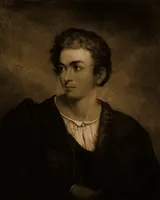
Richard Lander1804–1834
Richard Lemon Lander was a British explorer and writer born in Truro in 1804.
All 2 Richard Lander books, easiest first →Questions about Records of Captain Clapperton's last expedition to Africa, Vol. 1 (of 2)
Can I read Records of Captain Clapperton's last expedition to Africa, Vol. 1 (of 2) in English with German side by side online?
Yes, free. Paralelo shows the English original with a German machine translation beside it, aligned phrase by phrase: hover or tap a phrase and its counterpart lights up in the other column. Anyone can read a passage; a free account opens the whole book.
What level do I need to read Records of Captain Clapperton's last expedition to Africa, Vol. 1 (of 2) here?
There is no set level. Records of Captain Clapperton's last expedition to Africa, Vol. 1 (of 2) runs to 59,676 words in 18 chapters, and the translation sits beside it, aligned phrase by phrase, so you can start below the level the original would need on its own and lean on the translation only where you stumble.
Is Records of Captain Clapperton's last expedition to Africa, Vol. 1 (of 2) really free to read?
Yes. The text is in the public domain, and the translation and alignment are ours to give. A free account opens the whole book; the paid tier is for unlimited explanations.
Can I read Records of Captain Clapperton's last expedition to Africa, Vol. 1 (of 2) in another language?
Not yet. Each language is its own translation and alignment run, and titles are queued by demand: open the book in that language and press “Ask for priority” to move it up the queue.
How long does Records of Captain Clapperton's last expedition to Africa, Vol. 1 (of 2) take to read?
About 5 hours at a normal pace, longer if you stop to look at the alignment, which is rather the point.
Book details
- Original language
- English
- Translation
- German, machine translation
- Source text
- Project Gutenberg #78091
- Licence
- Public domain worldwide
Start Records of Captain Clapperton's last expedition to Africa, Vol. 1 (of 2) today.
Free forever, no card. The whole library opens with an account.
Start reading, it's free