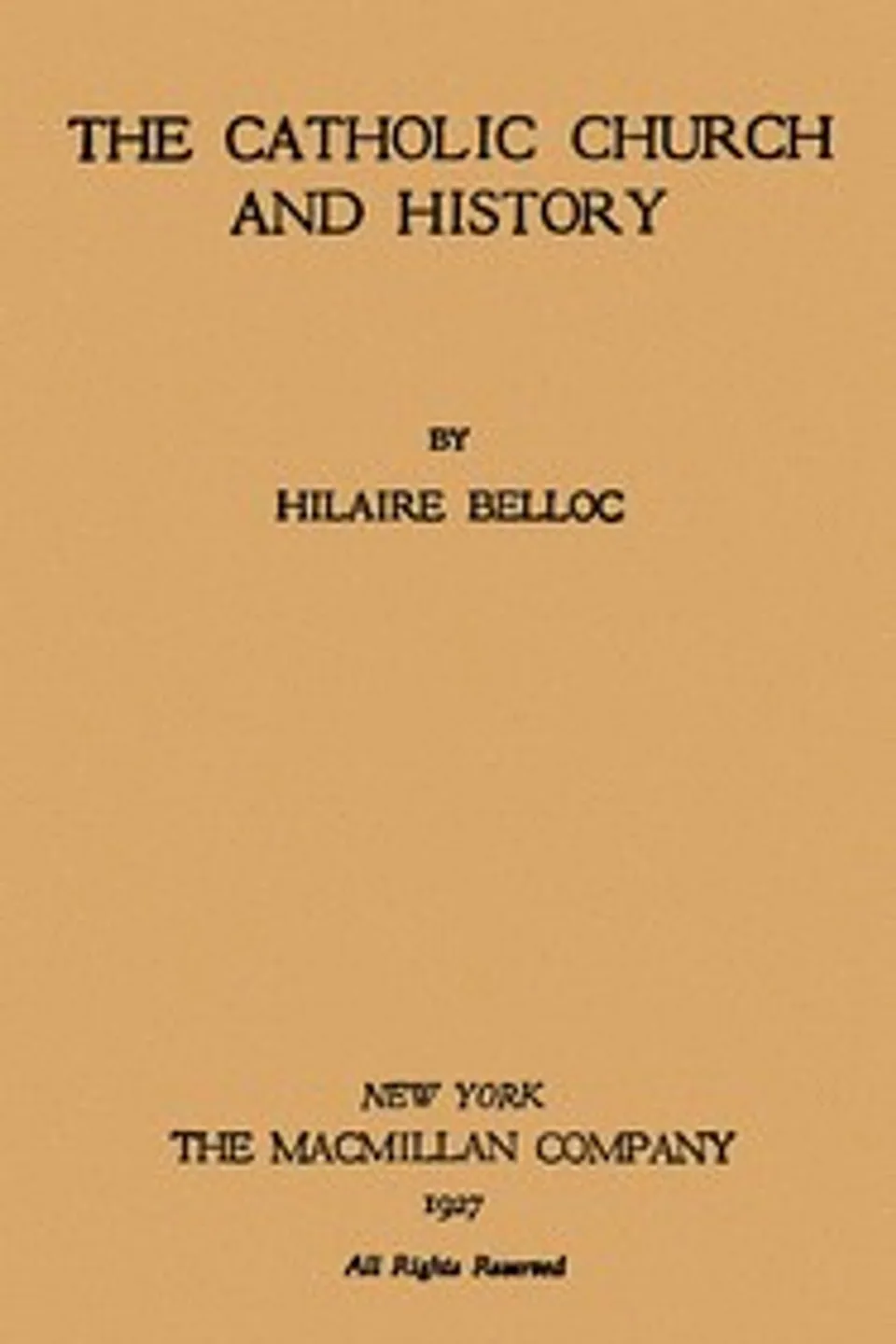
Read in English · with Spanish
Read The Catholic Church and history in English, with Spanish beside it
by Hilaire Belloc · 1870–1953
"The Catholic Church and history" by Hilaire Belloc is an apologetic treatise written in the early 20th century. It argues that historical study does not disprove the Catholic Church’s claim to divine and infallible authority, and it sets out to rebut, rather than to prove, that claim. The work classifies and answers moral and intellectual objections, from alleged factual errors and deceit to the charge that the Church is merely a man‑made religion. The opening of the work establishes its defensive purpose, defines “the Church,” and lays down premises: apologetics removes obstacles rather than proves the Faith, reason is absolute in its sphere, and only the Church’s accredited organs bind doctrine. It then rejects prosperity-as-proof and maps two lines of attack: moral (claims of doctrinal error, conscious fraud, and over-organisation) and intellectual (the Protestant corruption thesis and a broader sceptical thesis). Belloc argues that no solemn Church definition has been historically disproved, distinguishes development from contradiction, and rebuts classic cases—the Donation of Constantine and Galileo—by separating historical mistakes or disciplinary acts from dogmatic authority. He contends that organisation is a necessary mark of a living, authoritative society, not evidence against divinity. Turning to the Protestant line, he contrasts organic development with corruption, proposes tests of innovation and critical date, and claims heresies debut as novelties while no clear moment of “decline” can be fixed; the section closes by framing the modern sceptical challenge that all religion is man-made.
Summary generated automatically by Project Gutenberg.
- Read time
- 96 min
- Words
- 21,025
- Chapters
- 9
- Paragraphs
- 260
- Price
- Free
- Catholic Church -- Controversial literature
- Catholic Church -- Doctrines
- Catholic Church -- History
We must begin by establishing the main sections into which is divided the argument from History against the claims of the Catholic Church.
Debemos comenzar estableciendo las secciones principales en las que se divide el argumento histórico contra las pretensiones de la Iglesia Católica.
But before setting out these sections in their order I must reject one as having no relation to the discussion, though often confused with it: I mean the so-called historical argument from material prosperity.
Pero antes de exponer estas secciones en su orden, debo rechazar una por no tener relación con la discusión, aunque a menudo se confunde con ella: me refiero al llamado argumento histórico de la prosperidad material.
It is advanced that the claim of the Catholic Church to Divine Authority is negatived by a proved historical process whereby societies rejecting the Church’s claim are blessed with material prosperity, while societies accepting that claim become poor.
Se sostiene que la pretensión de la Iglesia Católica de tener Autoridad Divina queda refutada por un proceso histórico demostrado, mediante el cual las sociedades que rechazan la pretensión de la Iglesia son bendecidas con prosperidad material, mientras que las sociedades que aceptan dicha pretensión se empobrecen.
Such an argument no more applies to societies in their relation to the Church’s authority than it does to individuals in relation to the authority of their own conscience or of their own reason.
Tal argumento no se aplica a las sociedades en su relación con la autoridad de la Iglesia más que a los individuos en relación con la autoridad de su propia conciencia o de su propia razón.
My conviction that a course of action is morally right, or that a given statement is intellectually true, is not to be tested by its effect upon my income.
Mi convicción de que un curso de acción es moralmente correcto, o de que una afirmación dada es intelectualmente verdadera, no debe ponerse a prueba por su efecto sobre mis ingresos.
In point of fact, the argument is as worthless in its presumptions as in its reasoning.
En realidad, el argumento es tan inútil en sus presunciones como en su razonamiento.
The historical affirmation is historically false.
La afirmación histórica es históricamente falsa.
It is not true that societies have risen in wealth through the rejection of the Catholic Faith, or fallen in wealth through the retention of it.
No es cierto que las sociedades hayan aumentado su riqueza mediante el rechazo de la Fe Católica, ni que la hayan perdido mediante su mantenimiento.
The two phenomena are not correlated in History at all, and there is as much to be set upon the one side of the account in this brief two hundred years over which the rises and falls extend as on the other.
Los dos fenómenos no están correlacionados en la Historia en absoluto, y hay tanto a favor de un lado como del otro en esta breve historia de doscientos años durante la cual se extienden los ascensos y descensos.
But even were the statement true, the application of it would be clearly beside the mark:
Pero incluso si la afirmación fuera verdadera, su aplicación sería claramente inadecuada:
even had every Catholic society fallen into penury and every anti-Catholic risen to affluence, it would be utterly without bearing upon the truth or falsehood of the Catholic claim.
incluso si toda sociedad católica hubiera caído en la penuria y cada sociedad anticatólica hubiera alcanzado la abundancia, esto no tendría ninguna incidencia sobre la verdad o falsedad de la pretensión católica.
About the author
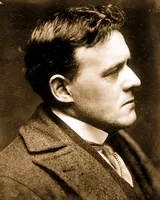
Hilaire Belloc1870–1953
Hilaire Belloc was a French-English writer, poet, and politician born in La Celle-Saint-Cloud in 1870 and died in Guildford in 1953.
All 2 Hilaire Belloc books, easiest first →Read it in another language
Questions about The Catholic Church and history
Can I read The Catholic Church and history in English with Spanish side by side online?
Yes, free. Paralelo shows the English original with a Spanish machine translation beside it, aligned phrase by phrase: hover or tap a phrase and its counterpart lights up in the other column. Anyone can read a passage; a free account opens the whole book.
What level do I need to read The Catholic Church and history here?
There is no set level. The Catholic Church and history runs to 21,025 words in 9 chapters, and the translation sits beside it, aligned phrase by phrase, so you can start below the level the original would need on its own and lean on the translation only where you stumble.
Is The Catholic Church and history really free to read?
Yes. The text is in the public domain, and the translation and alignment are ours to give. A free account opens the whole book; the paid tier is for unlimited explanations.
Can I read The Catholic Church and history in another language?
Yes. It is also published in French, Italian, and switching keeps your place, because both columns share one paragraph numbering.
How long does The Catholic Church and history take to read?
About 2 hours at a normal pace, longer if you stop to look at the alignment, which is rather the point.
Book details
- Original language
- English
- Translation
- Spanish, machine translation
- Source text
- Project Gutenberg #78085
- Licence
- Public domain worldwide
Start The Catholic Church and history today.
Free forever, no card. The whole library opens with an account.
Start reading, it's free