Read in English · with German
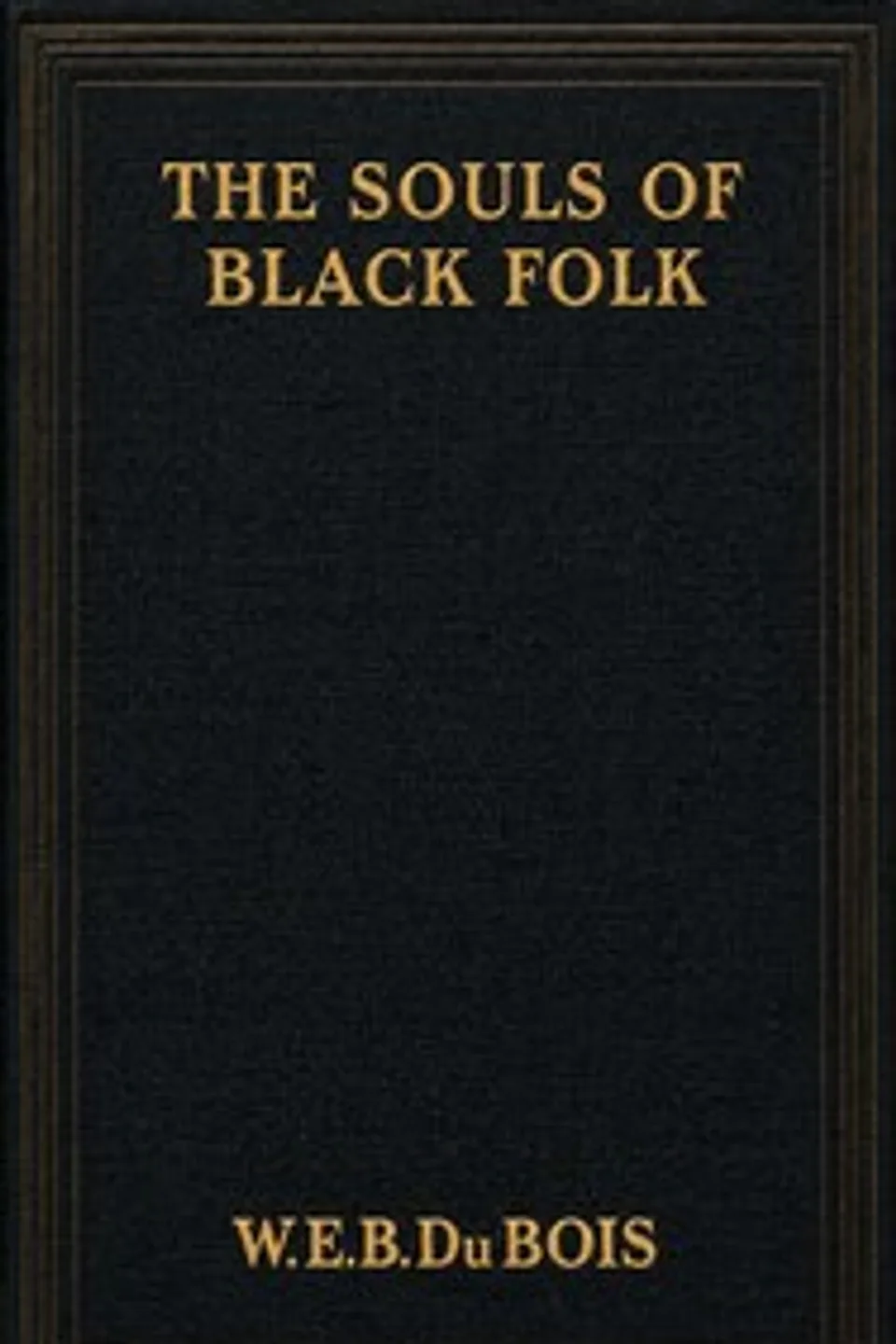
Read The Souls of Black Folk in English, with German beside it
by W. E. B. (William Edward Burghardt) Du Bois · 1868–1963
"The Souls of Black Folk" by W. E. B. Du Bois is a collection of essays published in 1903. This groundbreaking work explores the African-American experience through personal observations and social analysis. Du Bois introduces influential concepts like "double consciousness"—the experience of viewing oneself through both one's own eyes and those of a prejudiced society—and "the veil" that separates black and white Americans. Through essays on education, freedom, and justice, he examines the color line dividing races and argues for voting rights, quality education, and equal treatment.
Summary generated automatically by Project Gutenberg.
- Read time
- 312 min
- Words
- 68,628
- Chapters
- 1
- Paragraphs
- 522
- Price
- Free
- African Americans
Here, led by Remond, Nell, Wells-Brown, and Douglass, a new period of self-assertion and self-development dawned.
Hier, angeführt von Remond, Nell, Wells-Brown und Douglass, brach eine neue Periode der Selbstbehauptung und Selbstentwicklung an.
To be sure, ultimate freedom and assimilation was the ideal before the leaders, but the assertion of the manhood rights of the Negro by himself was the main reliance, and John Brown’s raid was the extreme of its logic.
Gewiss war die ultimative Freiheit und Assimilation das Ideal vor den Führern, aber die Selbstbehauptung der Männlichkeitsrechte des Negers durch ihn selbst war die Hauptstütze, und John Browns Überfall war die Extreme seiner Logik.
After the war and emancipation, the great form of Frederick Douglass, the greatest of American Negro leaders, still led the host.
Nach dem Krieg und der Emanzipation führte die große Gestalt von Frederick Douglass, der größte der amerikanischen Negerführer, immer noch die Menge.
Self-assertion, especially in political lines, was the main programme, and behind Douglass came Elliot, Bruce, and Langston, and the Reconstruction politicians, and, less conspicuous but of greater social significance,
Selbstbehauptung, insbesondere in politischen Linien, war das Hauptprogramm, und hinter Douglass kamen Elliot, Bruce und Langston, sowie die Rekonstruktionspolitiker, und, weniger auffällig, aber von größerer sozialer Bedeutung,
Alexander Crummell and Bishop Daniel Payne.
Alexander Crummell und Bischof Daniel Payne.
Then came the Revolution of 1876, the suppression of the Negro votes, the changing and shifting of ideals, and the seeking of new lights in the great night.
Dann kam die Revolution von 1876, die Unterdrückung der Negerstimmen, das Ändern und Verschieben der Ideale und das Suchen nach neuem Licht in der großen Nacht.
Douglass, in his old age, still bravely stood for the ideals of his early manhood,—ultimate assimilation through self-assertion, and on no other terms.
Douglass stand in seinem Alter noch tapfer für die Ideale seiner frühen Mannheit – ultimative Assimilation durch Selbstbehauptung, und unter keinen anderen Bedingungen.
For a time Price arose as a new leader, destined, it seemed, not to give up, but to re-state the old ideals in a form less repugnant to the white South.
Für eine Zeit erhob sich Price als neuer Führer, der dazu bestimmt schien, nicht aufzugeben, sondern die alten Ideale in einer Form neu zu formulieren, die dem weißen Süden weniger widerwärtig war.
But he passed away in his prime.
Doch er starb in seiner Blüte.
Then came the new leader.
Dann kam der neue Führer.
Nearly all the former ones had become leaders by the silent suffrage of their fellows, had sought to lead their own people alone, and were usually, save Douglass, little known outside their race.
Fast alle früheren waren Führer durch das stille Stimmrecht ihrer Mitmenschen geworden, hatten versucht, allein ihr eigenes Volk zu führen, und waren normalerweise, mit Ausnahme Douglass, außerhalb ihrer Rasse wenig bekannt.
But Booker T. Washington arose as essentially the leader not of one race but of two,—a compromiser between the South, the North, and the Negro.
Doch Booker T. Washington erhob sich als im Wesentlichen der Führer nicht einer, sondern zweier Rassen – ein Kompromiss zwischen dem Süden, dem Norden und dem Neger.
Naturally the Negroes resented, at first bitterly, signs of compromise which surrendered their civil and political rights, even though this was to be exchanged for larger chances of economic development.
Natürlich empörten sich die Neger anfangs bitter über Zeichen des Kompromisses, die ihre bürgerlichen und politischen Rechte aufgaben, auch wenn dies gegen größere Chancen der wirtschaftlichen Entwicklung eingetauscht werden sollte.
The rich and dominating North, however, was not only weary of the race problem, but was investing largely in Southern enterprises, and welcomed any method of peaceful cooperation.
Der reiche und dominierende Norden war jedoch nicht nur müde vom Rassenproblem, sondern investierte stark in südliche Unternehmen und begrüßte jede Methode der friedlichen Zusammenarbeit.
Thus, by national opinion, the Negroes began to recognize Mr. Washington’s leadership; and the voice of criticism was hushed.
So begannen die Neger durch die nationale Meinung, die Führung von Herrn Washington anzuerkennen; und die Stimme der Kritik verstummte.
About the author
W. E. B. (William Edward Burghardt) Du Bois1868–1963
W. E. B. Du Bois was a prominent American scholar and civil rights activist who lived from 1868 to 1963.
The W. E. B. (William Edward Burghardt) Du Bois page, and where to start →Read it in another language
Questions about The Souls of Black Folk
Can I read The Souls of Black Folk in English with German side by side online?
Yes, free. Paralelo shows the English original with a German machine translation beside it, aligned phrase by phrase: hover or tap a phrase and its counterpart lights up in the other column. Anyone can read a passage; a free account opens the whole book.
What level do I need to read The Souls of Black Folk here?
There is no set level. The Souls of Black Folk runs to 68,628 words, and the translation sits beside it, aligned phrase by phrase, so you can start below the level the original would need on its own and lean on the translation only where you stumble.
Is The Souls of Black Folk really free to read?
Yes. The text is in the public domain, and the translation and alignment are ours to give. A free account opens the whole book; the paid tier is for unlimited explanations.
Can I read The Souls of Black Folk in another language?
Yes. It is also published in French, and switching keeps your place, because both columns share one paragraph numbering.
How long does The Souls of Black Folk take to read?
About 5 hours at a normal pace, longer if you stop to look at the alignment, which is rather the point.
Book details
- Original language
- English
- Translation
- German, machine translation
- Source text
- Project Gutenberg #408
- Licence
- Public domain in the United States
Start The Souls of Black Folk today.
Free forever, no card. The whole library opens with an account.
Start reading, it's free