Key Takeaways
- A graded reader is rewritten to a fixed vocabulary, so you can read it alone. A bilingual book keeps the original and puts a translation beside it, so you read with help.
- Graded readers win on confidence and finishing. Bilingual books win on authentic language and on stories worth reading, and they do not expire when your level rises.
- The research case for reading a lot is solid; the research case for one format over the other is not. Choose the one you will actually keep opening.
- A sensible path for many learners: graded readers for the first few weeks, bilingual books as soon as the graded ones feel thin.
What is a graded reader?
A graded reader is a book written or rewritten for learners, using only a fixed number of basic words (called headwords) and a limited set of grammar for each level. The point is that you can read it alone, without a dictionary, and understand nearly everything on the page.
The best-known English series show how it works. The Oxford Bookworms Library runs from a Starter stage of 250 headwords to Stage 6 at 2,500, and Oxford maps Stage 1 (400 headwords) to roughly A1–A2 on the CEFR scale. Penguin Readers are organised the same way, in levels with a controlled vocabulary. Many are adaptations of classics: a Sherlock Holmes story or a Dickens novel, retold in a few thousand plain words.
Graded readers are good at three things. They let a beginner finish a whole book, which is rarer and more motivating than it sounds. They recycle the same common words many times, which is how words stick. And they let you read fast enough to follow a story rather than decode a paragraph.
What is a bilingual book?
A bilingual book, or parallel text, prints the original text in one language beside a translation in another. Nothing is simplified: you read what the author actually wrote, and when a sentence defeats you, the meaning is in the next column rather than in a dictionary. The help sits beside the text instead of inside it.
Print editions usually put the languages on facing pages, so you have to find your place on the other side. On a screen the two columns can be connected: on Paralelo, the original and the translation are aligned phrase by phrase, so tapping or hovering over a group of words lights up its counterpart in the other column. The books are public-domain classics, and the translations are machine translations checked before publishing and disclosed on every page.
For the longer case for this format, see our guide to bilingual books and parallel texts.
Strengths and weaknesses of each
Graded readers trade authenticity for ease; bilingual books trade ease for authenticity and then buy some of it back with the translation. Neither is better in general. Each has a failure mode worth knowing before you spend a month on it.
Graded readers, honestly:
- Strength: you can finish them, alone, early. Finishing is the habit that keeps people reading.
- Strength: the vocabulary is chosen for frequency, so the words you meet are words you will meet again.
- Weakness: the text is adapted. The sentences are correct and flat, and the turns of phrase that make a language feel alive are the first thing a simplification removes.
- Weakness: you outgrow each level by design. A shelf of Stage 1 books has nothing left to give you once you reach Stage 3.
- Weakness: the choice is narrow in languages other than English. Well-stocked series exist for English learners; for Portuguese or German the range is much thinner.
Bilingual books, honestly:
- Strength: the language is real. You meet the word order, idioms and rhythm that native readers meet.
- Strength: the book does not expire. The same text is readable at A2 with heavy use of the translation and at B2 with hardly any.
- Strength: you can read the books you actually want to read, which is the best predictor of whether you read at all.
- Weakness: the text is denser. Classic novels carry old words and long sentences, and without discipline you end up reading only the translation.
- Weakness: it is less restful. A graded reader is a comfortable glide; a parallel text asks you to keep choosing when to look across.
What the research says
Research strongly supports reading a lot in the new language, and it explains why unaided reading of real books is hard for beginners. It does not settle graded readers against bilingual books directly: we know of no strong study comparing the two, so be wary of anyone who claims one.
On reading volume: Takanori Nakanishi's meta-analysis of extensive reading research (TESOL Quarterly, 2015) pooled 34 studies with 3,942 participants and found a medium effect for learners who read extensively compared with those who did not (d = 0.46), and a larger one comparing learners before and after (d = 0.71). Extensive reading means reading a lot of text you mostly understand, for meaning, which is exactly what graded readers were designed for.
On why real books are hard: Hu and Nation's study Unknown vocabulary density and reading comprehension (Reading in a Foreign Language, 2000) concluded that readers need to know around 98% of the words in a text for comfortable unassisted reading. That is about one unknown word in fifty. An unadapted novel is far above that for most learners, which is the problem graded readers solve by shrinking the text.
The word that matters in Hu and Nation is unassisted. A parallel text is assisted reading: the unknown words are still there, but each costs a glance rather than a lookup. It is a different answer to the same problem, and the research on coverage explains both.
Which should you choose? A decision guide
Choose by three things: your level, what you want from reading, and how much time you have. Absolute beginners who want quiet confidence usually do better with graded readers. Anyone past the first months who wants real language, or who is bored, usually does better with bilingual books.
- You are in your first weeks and read slowly: start with graded readers, if a series exists in your language. The win is finishing whole books early.
- You are around A2 or above: try a bilingual book. The translation covers what you do not know, and you meet real language from the start.
- Your goal is to read literature, or to understand how natives write: bilingual books. Adapted texts cannot show you what they have removed.
- Your goal is to build basic vocabulary quickly: graded readers, read fast and in quantity, are hard to beat.
- You have ten minutes a day: a short bilingual text you can finish in one sitting, or one chapter of a graded reader. Short and finished beats long and abandoned.
- You are learning a language with few graded readers: bilingual books are often the only option with real range.
When to switch from one to the other
Switch from graded readers to bilingual books when the graded ones feel easy and dull, usually once you can read a mid-level reader without stopping. Switch the other way, or mix in graded readers, if you notice you are reading only the translation column.
Signs you are ready to leave graded readers: you guess the plot before it happens; you stop noticing new words; you are reading out of duty. At that point the simplification is costing you more than it saves.
Signs a bilingual book is too much for now: you read the translation first; you look across every line; you close the book after a page. The fix is not always to go back to graded readers. Try something much shorter first, and read each passage in the original before you look across.
The two also combine well. Many learners keep an easy graded reader for fluency, read quickly and for pleasure, and a bilingual book for depth, read slowly and with attention. If Spanish is your language, our post on Spanish books for A1 and A2 goes further into reading real Spanish early, and the Spanish learning hub gathers everything in one place.
Short books to try the bilingual side
The easiest way to judge is to read one short bilingual text today. These are all in the Paralelo library; a passage from each can be read without an account, and a free account opens the whole book.
Start with José Rizal's My Last Farewell, a Spanish poem of about three minutes, written before his execution in 1896. It is not a beginner text, but it is short enough to read twice, once leaning on the English and once without.
My Last Farewell
José Rizal · 3 min · Spanish with the translation beside it
For English, Charlotte Perkins Gilman's The Yellow Wallpaper takes about 28 minutes: a short story told in brief diary entries, which is kinder to a learner than long narrative paragraphs.
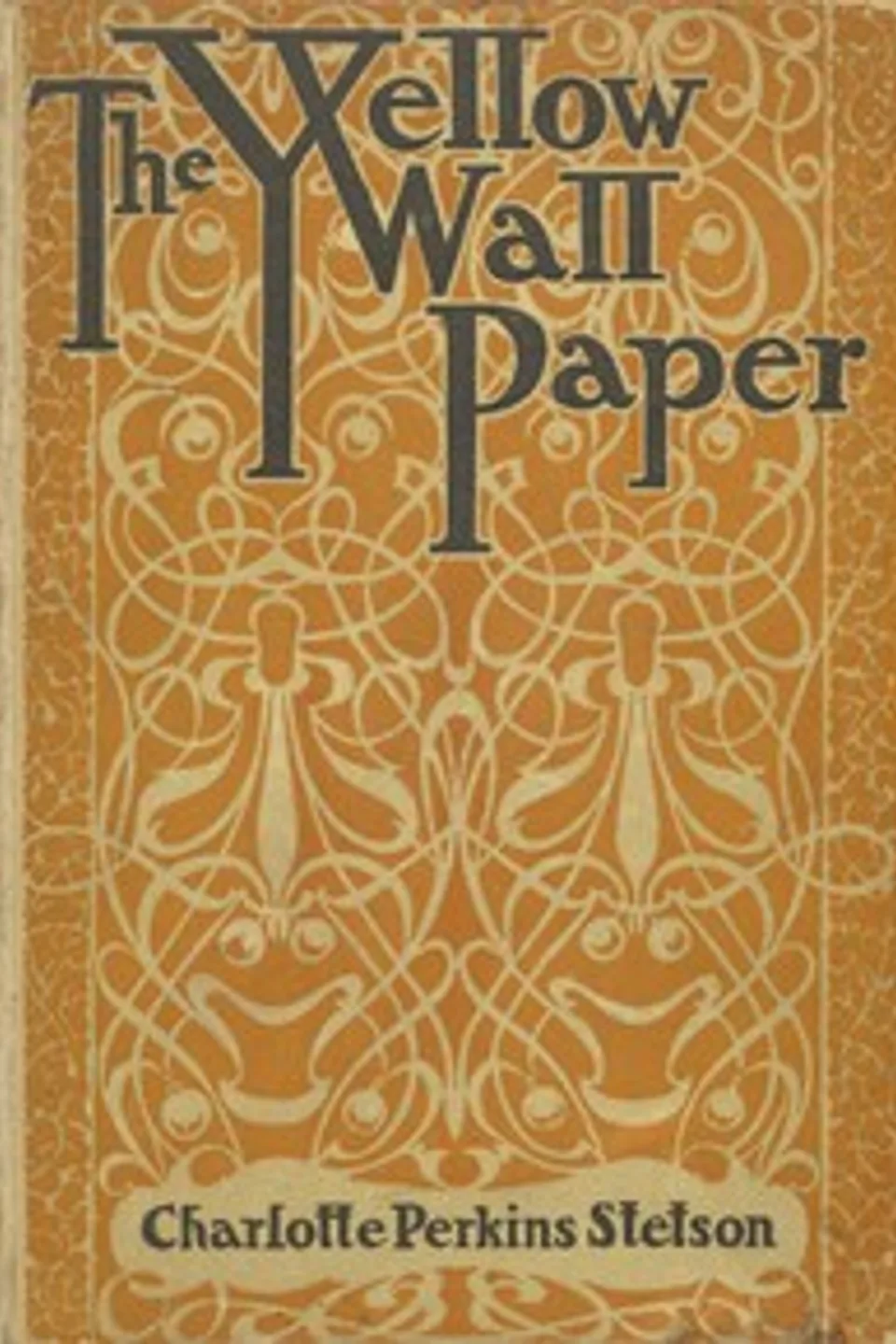
The Yellow Wallpaper
Charlotte Perkins Gilman · 28 min · English with the translation beside it
For German, Franz Kafka's The Metamorphosis runs to about an hour and a half. Kafka's prose is plain and precise, which makes it a good first real German book despite its reputation.
The Metamorphosis
Franz Kafka · 88 min · German with the translation beside it
When you want something longer in English, Robert Louis Stevenson's Dr Jekyll and Mr Hyde is about two hours, and the plot is familiar enough that you can spend your attention on the language.
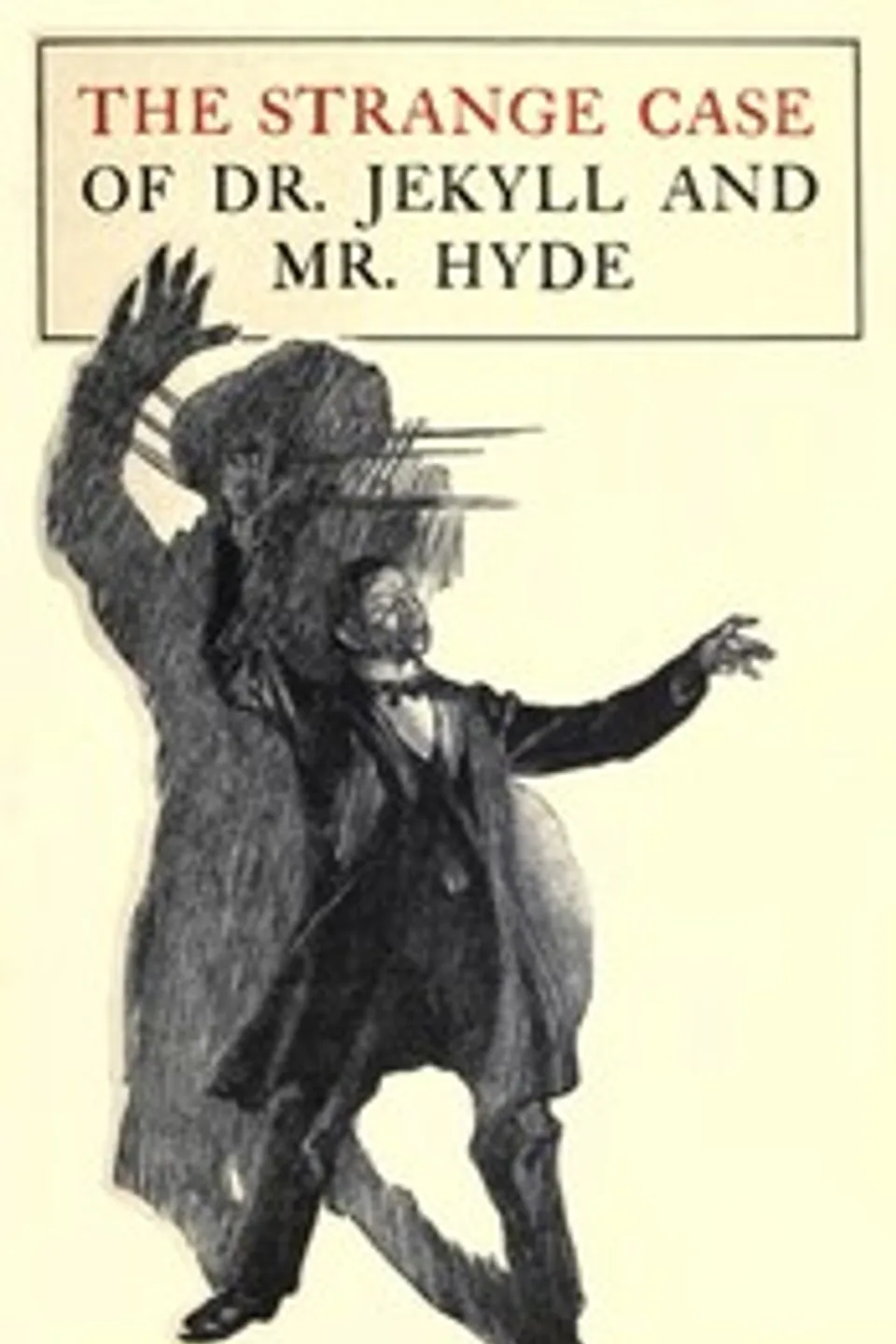
The strange case of Dr. Jekyll and Mr. Hyde
Robert Louis Stevenson · 116 min · English with the translation beside it
| Feature | Graded readers | Bilingual books |
|---|---|---|
| Text | Adapted or written to a level | Original, unchanged |
| Where the help is | Inside the text (simpler words) | Beside the text (the translation) |
| Best starting point | Absolute beginners | From about A2, or earlier with short texts |
| Read without help? | Yes, that is the design | Gradually, as you rely less on the translation |
| Language you meet | Frequent words, plain sentences | Real idiom, style and word order |
| Shelf life | Outgrown level by level | Useful at every level |
| Choice of titles | Wide in English, thin in many languages | Any text that has a translation |
| Main risk | Boredom | Reading only the translation |
Frequently Asked Questions
Are graded readers better than bilingual books for beginners?
For the very first weeks, often yes: they are built so a beginner can read alone and finish. From about A2, bilingual books become a strong alternative, because the translation covers the gaps that a real text would otherwise leave.
Do bilingual books make you lazy?
They can, if you read the translation first. Read each passage in the original, then look across only for what blocks you. Used that way, the translation is a safety net rather than the thing you are reading.
How many words do I need to read a real book?
Hu and Nation (2000) found that comfortable unassisted reading needs about 98% of the words to be known. With a translation beside the text, you can read well below that, because unknown words no longer stop you.
Are Paralelo's books graded by level?
No. Paralelo does not assign CEFR levels to books. Reading times are shown, so you can start with something short, such as a three-minute poem, and work up.
Can I use both at once?
Yes, and it works well: an easy graded reader for fast, fluent reading, and a bilingual book for slower reading of real language. They train different things.