Key Takeaways
- A CEFR level describes what you can read on your own. A parallel text is not reading on your own, so it moves the question from “is this book at my level” to “how much help do I need on this page”.
- A graded reader is written to a level and stops being useful the moment you pass it. A real book stays useful, because what comes off gradually is the support and not the text.
- Start with something short. Finishing a three-minute poem in Spanish does more for you than abandoning a novel on page four.
- Read the Spanish first, every time. The moment you read the English first, the Spanish stops being reading and becomes a check.
- Do not look up every word. Look up the word that is blocking the sentence, and let the rest go past.
What A1 and A2 actually describe
The CEFR levels describe a person, not a text. A1 is being able to handle familiar everyday expressions and very simple phrases; A2 is sentences and frequently used vocabulary about things immediately relevant to you. Both descriptions are about what you can do without help.
That is why “A1 Spanish books” is a search for a category that only exists under one condition: reading alone. A book has no level of its own. It is hard or easy depending on what is next to it, how much of the story you already know, and whether you can find out what a sentence means without closing the book to do it.
Paralelo does not label books by CEFR level, and this page is not going to pretend otherwise. Assigning a level to a nineteenth-century novel would be a guess dressed up as a filter, and you would plan your reading around it.
Why every beginner book list looks the same
Search for Spanish books at A1 and you get the same handful of graded readers, because that is genuinely the whole category. Very little is written for adults at that level, so publishers write it on purpose: controlled vocabulary, controlled tenses, a plot built to fit them.
They work, and they are also where a lot of people quietly stop. Graded readers or bilingual books weighs the trade in full; in short, four things go wrong:
- You outgrow them by design. A book written to A1 has nothing left to give you at A2, so the shelf you just built becomes a shelf you have finished with.
- The vocabulary was chosen by a syllabus rather than by a writer, so the words you learn are the words a course thinks you need and not the ones the story needed.
- The sentences are correct and nobody would say them. You can read a whole graded reader without meeting a single turn of phrase worth stealing.
- Finishing one gives you nothing you want to tell anyone about. That matters more than it sounds: the reason people keep reading in a second language is that the book was worth reading.
What changes when the translation is beside the page
The reason a real Spanish book is impossible at A1 is not the vocabulary. It is that every unknown word costs you the thread. You stop, you look it up, you come back, and by then the sentence has gone. Ten of those in a paragraph and you are no longer reading, you are decoding.
Putting the translation in the next column removes the cost of not knowing. A word you have never seen costs a glance rather than a dictionary, and the sentence stays a sentence. That is the whole mechanism, and it is why the level of the book stops being the deciding question.
The two columns here are aligned in phrase groups rather than word for word, because word-for-word glosses mislead: Spanish and English do not put meaning in the same order, and a one-to-one line between them tells you something false about both. A phrase group shows you which handful of Spanish words does the job of which handful of English ones, which is the thing you are actually trying to learn. Our guide to bilingual books and parallel text goes further into how this kind of reading works.
What to read first
Three criteria, in order of how much they matter at A1:
- Short enough to finish in one sitting. Not short enough to be trivial — short enough that you reach the end. Finishing is the habit you are building; comprehension follows it rather than the other way round.
- A story you already half know, or one whose shape is obvious. Knowing roughly where a text is going frees up the attention you would otherwise spend on the plot.
- A voice you would read in your own language. This sounds like a luxury at A1 and it is the criterion that decides whether you are still reading in a month.
If you want one concrete starting point, José Rizal’s Mi último adiós takes about three minutes. It is not a beginner text — it is a farewell poem written shortly before his execution in 1896, in nineteenth-century Spanish — but it is short enough to read twice inside ten minutes, and reading something twice is worth more at A1 than reading something easy once.

My Last Farewell
José Rizal · 3 min · Spanish with the translation beside it
After the poem, go to a story rather than a novel. Horacio Quiroga’s Cuentos de amor, de locura y de muerte is a collection of short, direct stories, most of which you can finish in one sitting with the translation beside you. It was written for adult readers in 1917, so expect to look across often; each story is still a whole thing you reach the end of.

Tales of Love, Madness and Death
Horacio Quiroga · 224 min · Spanish with the translation beside it
When those feel manageable, Emilia Pardo Bazán’s Cuentos de amor is the next step: tales of a few pages each, with longer and more elaborate sentences.
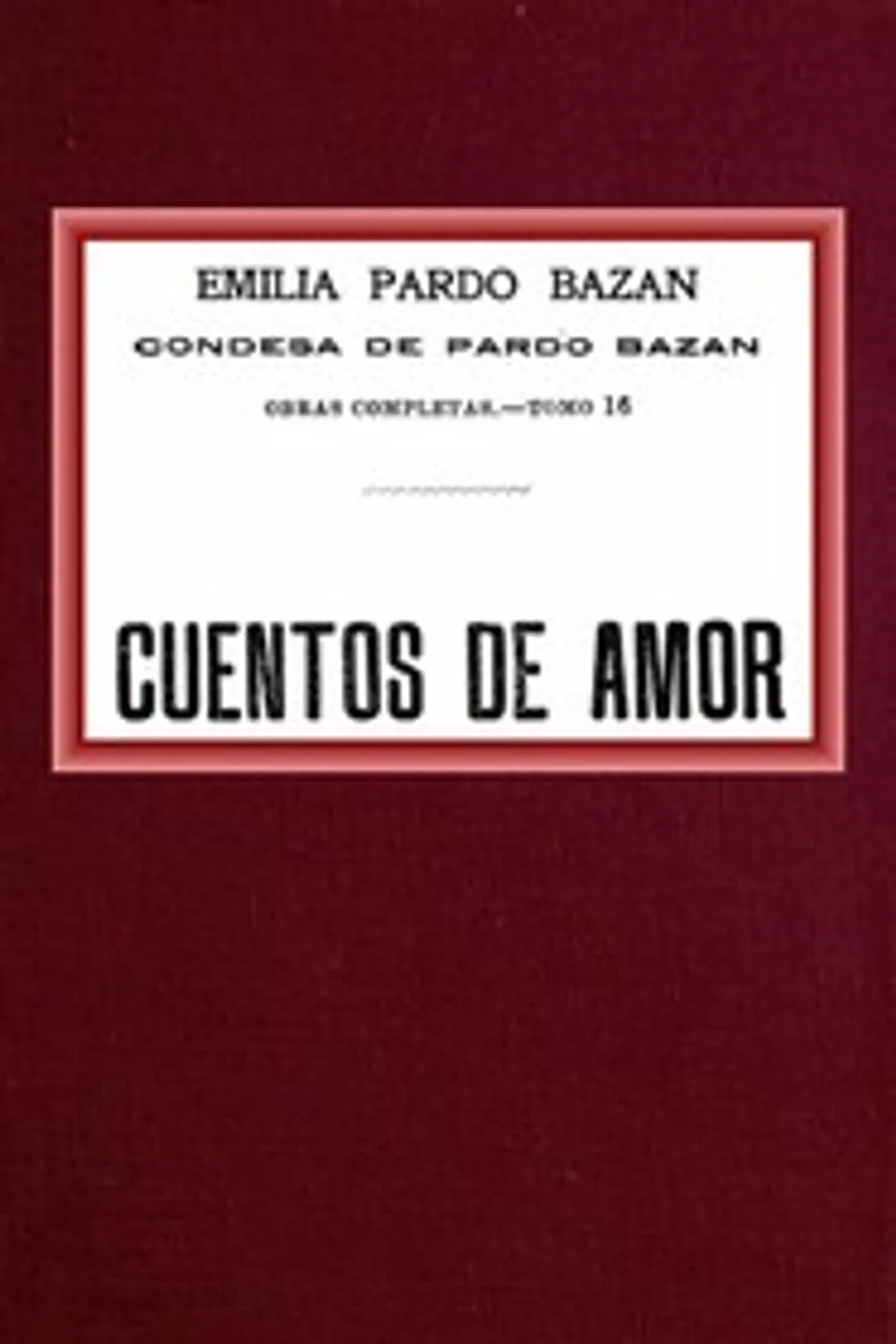
Tales of Love
Emilia Pardo Bazán · 289 min · Spanish with the translation beside it
Everything else is on the shelf below and on the learn Spanish by reading page, which list the Spanish titles readable today and grow as the catalogue does. For a list sorted from beginner to advanced, including modern novels you will find elsewhere, see the best books to learn Spanish.
A routine that survives contact with a real book
- Twenty minutes, most days. Not an hour on Sunday. Reading in a second language is a habit before it is a skill.
- Read the Spanish column first. Always. The English is there for when you are stuck, not for when you are curious — the moment you lead with it, the Spanish becomes a translation exercise.
- First pass without stopping. Let the unknown words go past and find out whether you got the gist. You usually did.
- Second pass with the translation, on the sentences that beat you. This is where the learning is.
- Ask about one sentence, not ten. Pick the one whose grammar you could not reconstruct even after reading the translation, and get that explained properly.
A free account includes a daily allowance of explanations, which is enough to take apart the two or three sentences a chapter that genuinely defeat you. It is deliberately not enough to run every sentence through it, because a sentence you worked out yourself is a sentence you keep.
Knowing when you have moved past A2
There is no test for this and you do not need one. The signals are behavioural:
- You notice you have read a page without looking across.
- You start disagreeing with the translation — not because it is wrong, but because you can now see it made a choice.
- The word you look up is a word the writer chose, rather than a word you simply did not have.
When that starts happening, nothing about your reading needs to change. That is the point of learning on real books rather than on a level: there is no next tier to move up to, because you were already reading the thing you were working towards.
Frequently Asked Questions
Are there Spanish books at A1 level on Paralelo?
No, and we do not label books by level. The catalogue is public-domain literature written for adult native speakers. What makes it readable at A1 is the translation aligned beside it, not the difficulty of the Spanish — and claiming otherwise would be inventing a filter we do not have.
Should I read the Spanish side or the English side first?
Spanish first, every time, even when you understand almost none of it. Reading the English first turns the Spanish column into a check on a translation you have already read, and you learn very little from confirming something you already know.
How many Spanish words do I need before I start?
Fewer than you think, because a parallel text removes the threshold. The number people usually quote is the number you need to read unaided, which is a different activity from this one.
Is reading with a translation beside you cheating?
It is the same thing a facing-page bilingual edition has done for centuries, and nobody accused those of cheating. What would be cheating is reading only the English — which is why the habit of leading with the Spanish is the one thing on this page worth being strict about.
What is the practical difference between A1 and A2 for reading?
At A1 you are recognising words and needing the other column constantly. At A2 you start holding whole sentences and reach across for a phrase rather than a page. The book does not need to change between the two; the amount you look across does.