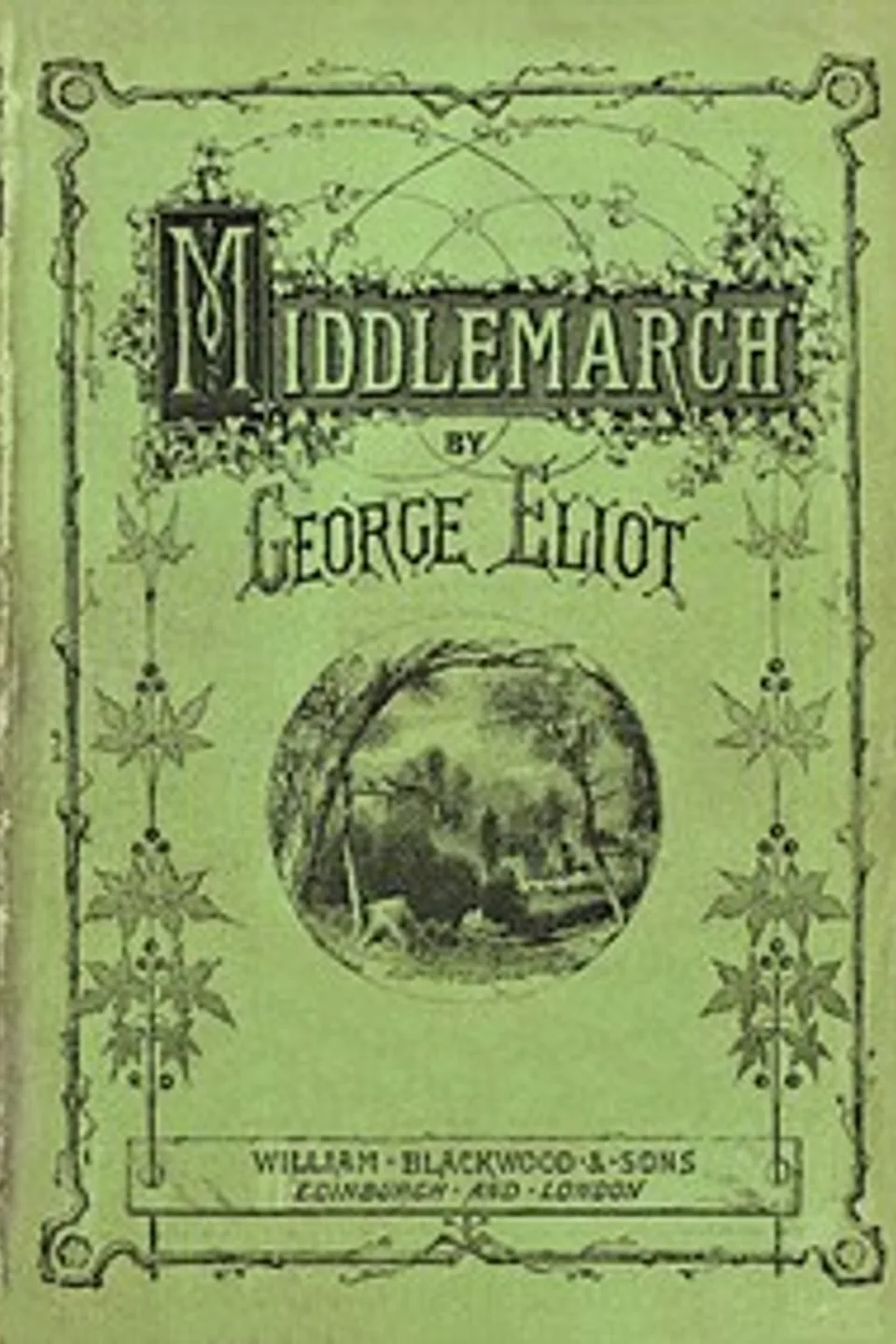
Read in English · with Spanish
Read Middlemarch in English, with Spanish beside it
by George Eliot · 1819–1880
"Middlemarch" by George Eliot is a novel published in 1871-1872. Set in a fictional English Midlands town from 1829 to 1832, it weaves together multiple intersecting stories exploring the status of women, marriage, idealism, and political reform. The narrative follows Dorothea Brooke's search for purpose, Dr. Lydgate's medical ambitions, and several other inhabitants navigating love, debt, scandal, and social change against the backdrop of the approaching Reform Act of 1832.
Summary generated automatically by Project Gutenberg.
- Read time
- 1435 min
- Words
- 315,647
- Chapters
- 86
- Paragraphs
- 4,766
- Price
- Free
- Bildungsromans
- City and town life -- Fiction
- Didactic fiction
- Domestic fiction
- England -- Fiction
- Love stories
- Married people -- Fiction
- Young women -- Fiction
“I don’t want to quarrel.
«No quiero discutir.
It’s for my interest—and perhaps for yours too—that we should be friends.
Es por mi interés —y quizás por el tuyo también— que seamos amigos.
I bear you no grudge; I think no worse of you than I do of other people.
No te guardo rencor; no pienso peor de ti que de otras personas.
A man who half starves himself, and goes the length in family prayers, and so on, that you do, believes in his religion whatever it may be:
Un hombre que se media hambre a sí mismo, y llega hasta el extremo en las oraciones familiares, y así sucesivamente, como tú haces, cree en su religión, sea cual sea:
you could turn over your capital just as fast with cursing and swearing:—plenty of fellows do.
podrías hacer girar tu capital tan rápido maldiciendo y jurando: hay muchos que lo hacen.
You like to be master, there’s no denying that; you must be first chop in heaven, else you won’t like it much.
Te gusta ser el amo, eso no se puede negar; debes ser el primero en el cielo, si no, no te gustará mucho.
But you’re my sister’s husband, and we ought to stick together;
Pero eres el marido de mi hermana, y deberíamos mantenernos unidos;
and if I know Harriet, she’ll consider it your fault if we quarrel because you strain at a gnat in this way, and refuse to do Fred a good turn.
y si conozco a Harriet, ella considerará que es tu culpa si discutimos porque te escrupulizas por una mosca de esta manera, y te niegas a hacerle un favor a Fred.
And I don’t mean to say I shall bear it well.
Y no quiero decir que lo soportaré bien.
I consider it unhandsome.”
Lo considero desleal».
Mr. Vincy rose, began to button his great-coat, and looked steadily at his brother-in-law, meaning to imply a demand for a decisive answer.
El señor Vincy se levantó, comenzó a abotonarse su abrigo y miró fijamente a su cuñado, con la intención de implicar una demanda de una respuesta decisiva.
This was not the first time that Mr. Bulstrode had begun by admonishing Mr. Vincy,
Esta no era la primera vez que el señor Bulstrode había comenzado reprendiendo al señor Vincy,
and had ended by seeing a very unsatisfactory reflection of himself in the coarse unflattering mirror which that manufacturer’s mind presented to the subtler lights and shadows of his fellow-men;
y había terminado viendo un reflejo muy insatisfactorio de sí mismo en el grueso y despiadado espejo que la mente de aquel fabricante presentaba a las sutiles luces y sombras de sus semejantes;
and perhaps his experience ought to have warned him how the scene would end.
y quizás su experiencia debería haberle advertido de cómo terminaría la escena.
But a full-fed fountain will be generous with its waters even in the rain, when they are worse than useless; and a fine fount of admonition is apt to be equally irrepressible.
Pero una fuente bien alimentada será generosa con sus aguas incluso cuando llueva, cuando estas son peores que inútiles; y una buena fuente de reprensión es propensa a ser igualmente irrefrenable.
About the author
George Eliot1819–1880
George Eliot, born Mary Ann Evans in Nuneaton in 1819, was a leading Victorian novelist and translator.
The George Eliot page, and where to start →Read it in another language
Questions about Middlemarch
Can I read Middlemarch in English with Spanish side by side online?
Yes, free. Paralelo shows the English original with a Spanish machine translation beside it, aligned phrase by phrase: hover or tap a phrase and its counterpart lights up in the other column. Anyone can read a passage; a free account opens the whole book.
What level do I need to read Middlemarch here?
There is no set level. Middlemarch runs to 315,647 words in 86 chapters, and the translation sits beside it, aligned phrase by phrase, so you can start below the level the original would need on its own and lean on the translation only where you stumble.
Is Middlemarch really free to read?
Yes. The text is in the public domain, and the translation and alignment are ours to give. A free account opens the whole book; the paid tier is for unlimited explanations.
Can I read Middlemarch in another language?
Yes. It is also published in French, Italian, Portuguese, and switching keeps your place, because both columns share one paragraph numbering.
How long does Middlemarch take to read?
About 24 hours at a normal pace, longer if you stop to look at the alignment, which is rather the point.
Book details
- Original language
- English
- Translation
- Spanish, machine translation
- Source text
- Project Gutenberg #145
- Licence
- Public domain worldwide
Start Middlemarch today.
Free forever, no card. The whole library opens with an account.
Start reading, it's free