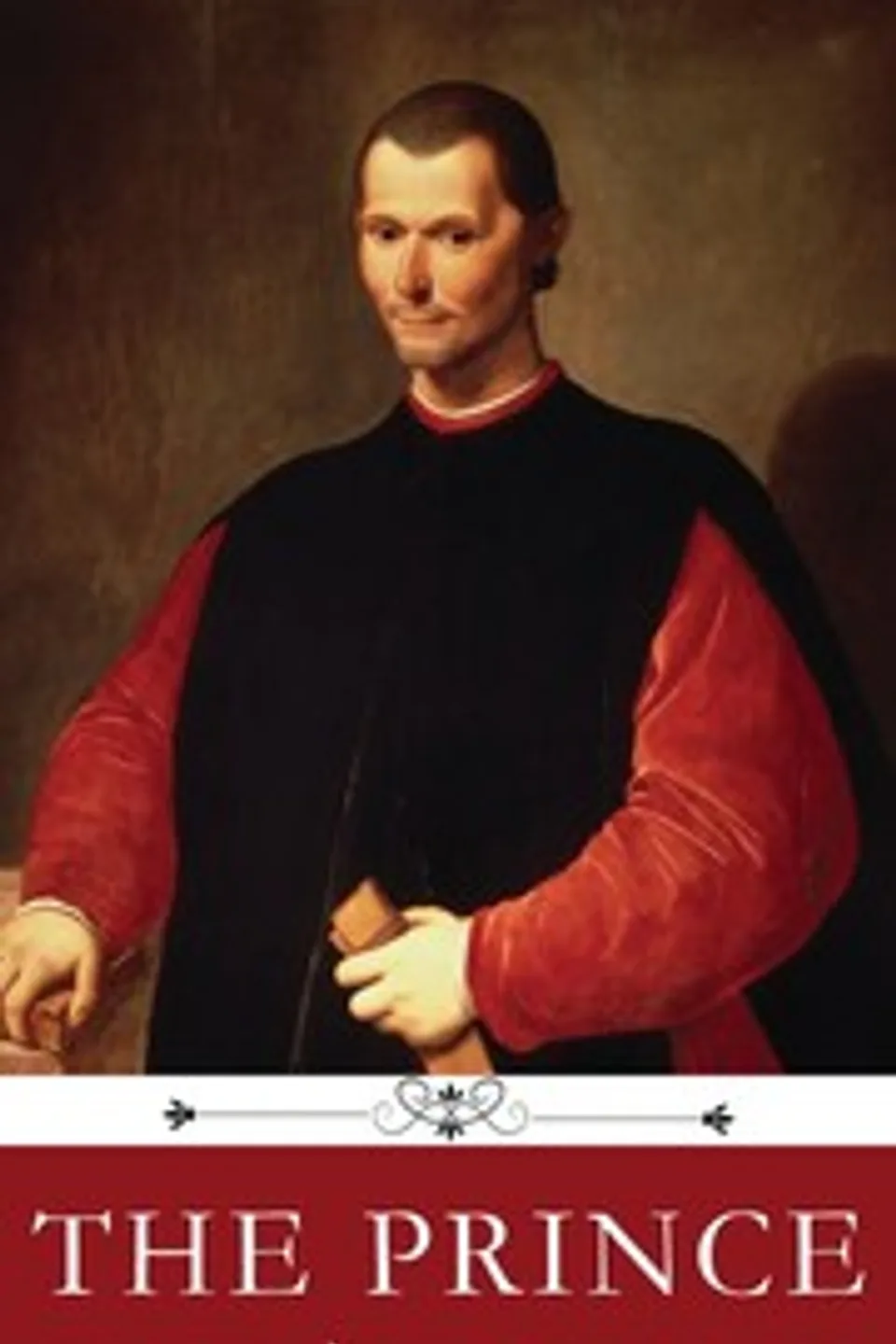
Leer en inglés · con el español
Lee El Príncipe en inglés, con el español al lado
Título original: The Prince
de Niccolò Machiavelli · 1469–1527
«El Príncipe» de Nicolás Maquiavelo es un tratado político escrito en 1513 y publicado en 1532. Presentado como una guía de instrucciones para los nuevos gobernantes, esta obra controvertida sugiere que los actos inmorales pueden ser necesarios para alcanzar el poder político y la gloria. Escrito en italiano vernáculo en lugar de latín, se aparta de la literatura tradicional de consejos al centrarse en la eficacia práctica sobre los ideales abstractos. Su visión del mundo desafió las doctrinas católicas dominantes de la época, haciendo que «maquiavélico» se sinónime con la astucia política y contribuyendo a las connotaciones negativas modernas de la política en sí misma.
Resumen generado automáticamente por el Proyecto Gutenberg, traducido por un modelo.
- Duración
- 225 min
- Palabras
- 49.582
- Capítulos
- 32
- Párrafos
- 377
- Precio
- Gratis
- Political ethics -- Early works to 1800
- Political science -- Philosophy -- Early works to 1800
- State, The -- Early works to 1800
Again, the prince who holds a country differing in the above respects ought to make himself the head and defender of his less powerful neighbours, and to weaken the more powerful amongst them,
De nuevo, el príncipe que posee un país que difiere en los aspectos mencionados debe hacerse cabeza y defensor de sus vecinos menos poderosos, y debilitar a los más poderosos entre ellos,
taking care that no foreigner as powerful as himself shall, by any accident, get a footing there; for it will always happen that such a one will be introduced by those who are discontented,
cuidando de que ningún extranjero tan poderoso como él, por cualquier accidente, se establezca allí; pues siempre ocurrirá que tal uno será introducido por aquellos que están descontentos,
either through excess of ambition or through fear, as one has seen already.
ya sea por exceso de ambición o por miedo, como ya se ha visto.
The Romans were brought into Greece by the Ætolians; and in every other country where they obtained a footing they were brought in by the inhabitants.
Los romanos fueron llevados a Grecia por los etolios; y en cada otro país donde obtuvieron pie fueron introducidos por los habitantes.
And the usual course of affairs is that, as soon as a powerful foreigner enters a country, all the subject states are drawn to him, moved by the hatred which they feel against the ruling power.
Y el curso habitual de los asuntos es que, tan pronto como un poderoso extranjero entra en un país, todos los estados sujetos son atraídos hacia él, movidos por el odio que sienten contra el poder dominante.
So that in respect to those subject states he has not to take any trouble to gain them over to himself, for the whole of them quickly rally to the state which he has acquired there.
Así que, con respecto a esos estados sujetos, no tiene que preocuparse por ganárselos, pues todos ellos rápidamente se unen al estado que ha adquirido allí.
He has only to take care that they do not get hold of too much power and too much authority, and then with his own forces, and with their goodwill, he can easily keep down the more powerful of them,
Solo tiene que cuidar de que no adquieran demasiado poder y demasiada autoridad, y entonces, con sus propias fuerzas y con su buena voluntad, puede fácilmente mantener a raya a los más poderosos de ellos,
so as to remain entirely master in the country.
de modo que permanezca completamente amo en el país.
And he who does not properly manage this business will soon lose what he has acquired, and whilst he does hold it he will have endless difficulties and troubles.
Y quien no gestione adecuadamente este asunto pronto perderá lo que ha adquirido, y mientras lo posea tendrá dificultades y problemas sin fin.
The Romans, in the countries which they annexed, observed closely these measures; they sent colonies and maintained friendly relations with[2] the minor powers, without increasing their strength;
Los romanos, en los países que anexaron, observaron estrechamente estas medidas; enviaron colonias y mantuvieron relaciones amistosas con[2] los poderes menores, sin aumentar su fuerza;
they kept down the greater, and did not allow any strong foreign powers to gain authority.
mantuvieron a raya a los mayores, y no permitieron que ningún poder extranjero fuerte ganara autoridad.
Greece appears to me sufficient for an example.
Grecia me parece suficiente como ejemplo.
The Achaeans and Ætolians were kept friendly by them, the kingdom of Macedonia was humbled, Antiochus was driven out;
Los aqueos y los etolios fueron mantenidos amistosos por ellos, el reino de Macedonia fue humillado, Antíoco fue expulsado;
yet the merits of the Achaeans and Ætolians never secured for them permission to increase their power, nor did the persuasions of Philip ever induce the Romans to be his friends without first humbling him,
sin embargo, los méritos de los aqueos y los etolios nunca les aseguraron el permiso para aumentar su poder, ni las persuasiones de Felipe nunca indujeron a los romanos a ser sus amigos sin antes humillarlo, ni la influencia de Antíoco los
nor did the influence of Antiochus make them agree that he should retain any lordship over the country.
hizo aceptar que retuviera cualquier señorío sobre el país.
Because the Romans did in these instances what all prudent princes ought to do, who have to regard not only present troubles, but also future ones, for which they must prepare with every energy, because, when foreseen,
Porque los romanos hicieron en estos casos lo que todos los príncipes prudentes deberían hacer, quienes deben considerar no solo los problemas presentes, sino también los futuros, para los cuales deben prepararse con toda energía, porque, cuando se prevén,
it is easy to remedy them; but if you wait until they approach, the medicine is no longer in time because the malady has become incurable; for it happens in this, as the physicians say it happens in hectic fever,
es fácil remediarlos; pero si esperas hasta que se acerquen, la medicina ya no llega a tiempo porque la enfermedad se ha vuelto incurable; pues ocurre en esto, como dicen los médicos que ocurre en la fiebre
that in the beginning of the malady it is easy to cure but difficult to detect, but in the course of time, not having been either detected or treated in the beginning, it becomes easy to detect but difficult to cure.
que al principio de la enfermedad es fácil curarla pero difícil detectarla, pero con el paso del tiempo, al no haber sido ni detectada ni tratada al principio, se vuelve fácil de detectar pero difícil de curar.
Thus it happens in affairs of state, for when the evils that arise have been foreseen (which it is only given to a wise man to see), they can be quickly redressed, but when,
Así ocurre en los asuntos de estado, porque cuando los males que surgen han sido previstos (lo cual solo es dado a un hombre sabio ver), pueden ser rápidamente reparados, pero cuando,
through not having been foreseen, they have been permitted to grow in a way that every one can see them, there is no longer a remedy.
al no haber sido previstos, se han permitido crecer de una manera que todos pueden verlos, ya no hay remedio.
Therefore, the Romans, foreseeing troubles, dealt with them at once, and, even to avoid a war, would not let them come to a head, for they knew that war is not to be avoided,
Por lo tanto, los romanos, previendo problemas, los abordaron de inmediato, y, incluso para evitar una guerra, no permitieron que llegaran a un punto crítico, pues sabían que la guerra no se puede evitar,
but is only to be put off to the advantage of others; moreover they wished to fight with Philip and Antiochus in Greece so as not to have to do it in Italy; they could have avoided both,
sino que solo se puede posponer en beneficio de otros; además, deseaban luchar contra Felipe y Antíoco en Grecia para no tener que hacerlo en Italia; podrían haber evitado ambos,
but this they did not wish; nor did that ever please them which is forever in the mouths of the wise ones of our time:—Let us enjoy the benefits of the time—
pero eso no deseaban; ni eso nunca les agradó, lo que está siempre en las bocas de los sabios de nuestro tiempo: Disfrutemos los beneficios del tiempo—
but rather the benefits of their own valour and prudence, for time drives everything before it, and is able to bring with it good as well as evil, and evil as well as good.
sino los beneficios de su propia valía y prudencia, porque el tiempo lo arrastra todo, y es capaz de traer consigo el bien así como el mal, y el mal así como el bien.
Sobre el autor

Niccolò Machiavelli1469–1527
Niccolò Machiavelli (1469-1527) fue un diplomático, filósofo político y escritor florentino, figura clave del Renacimiento italiano.
La página de Niccolò Machiavelli, y por dónde empezar →Léelo en otro idioma
Preguntas sobre El Príncipe
¿Puedo leer El Príncipe en inglés con la traducción al español al lado, en línea?
Sí, gratis. Paralelo muestra el original en inglés con una traducción automática al español al lado, alineada grupo por grupo: pasa el cursor o toca un grupo y su equivalente se ilumina en la otra columna. Cualquiera puede leer un pasaje; una cuenta gratuita abre el libro entero.
¿Qué nivel necesito para leer El Príncipe aquí?
No hay un nivel mínimo. El Príncipe tiene 49.582 palabras en 32 capítulos, y la traducción está al lado, alineada frase a frase, así que puedes empezar por debajo del nivel que pediría el original solo y recurrir a la traducción solo donde tropieces.
¿El Príncipe es realmente gratis?
Sí. El texto es de dominio público, y la traducción y la alineación son nuestras. Una cuenta gratuita abre el libro entero; el plan de pago es para explicaciones ilimitadas.
¿Puedo leer El Príncipe en otro idioma?
Sí. También está publicado en alemán, francés, italiano, portugués, y al cambiar conservas tu sitio, porque ambas columnas comparten la misma numeración de párrafos.
¿Cuánto se tarda en leer El Príncipe?
Unos 4 horas a un ritmo normal, más si te detienes en la alineación, que es justo de lo que se trata.
Ficha del libro
- Idioma original
- inglés
- Traducción
- español, traducción automática
- Texto de origen
- Project Gutenberg #1232
- Licencia
- Dominio público en todo el mundo
Más obras escritas en inglésMismo idioma, mismo estante










Empieza El Príncipe hoy.
Gratis para siempre, sin tarjeta. Toda la biblioteca se abre con una cuenta.
Empezar a leer, es gratis